One Tool to Rule Them All
Testing Monid's "super tool", Neon's postgres database solutions, & the Figma-killer
ROUND 4
Here’s the fourth edition of Smoke Test!
In edition #003, Apify earned its place, Attio made us question what CRM infrastructure should cost, and Stanley proved that a clean interface can’t manufacture taste. Read it here.
This week, we tested one tool that’s been in our stack for awhile, and two new products that give our agents greater operating surface area.
Monid ~ Tool & API aggregator
Neon ~ Postgres backends for apps and agents
Paper ~ Canvas for generating design docs
Is Monid really the one tool that rules them all? Let’s find out….
TOOL & API AGGREGATOR
Monid: Grade B+
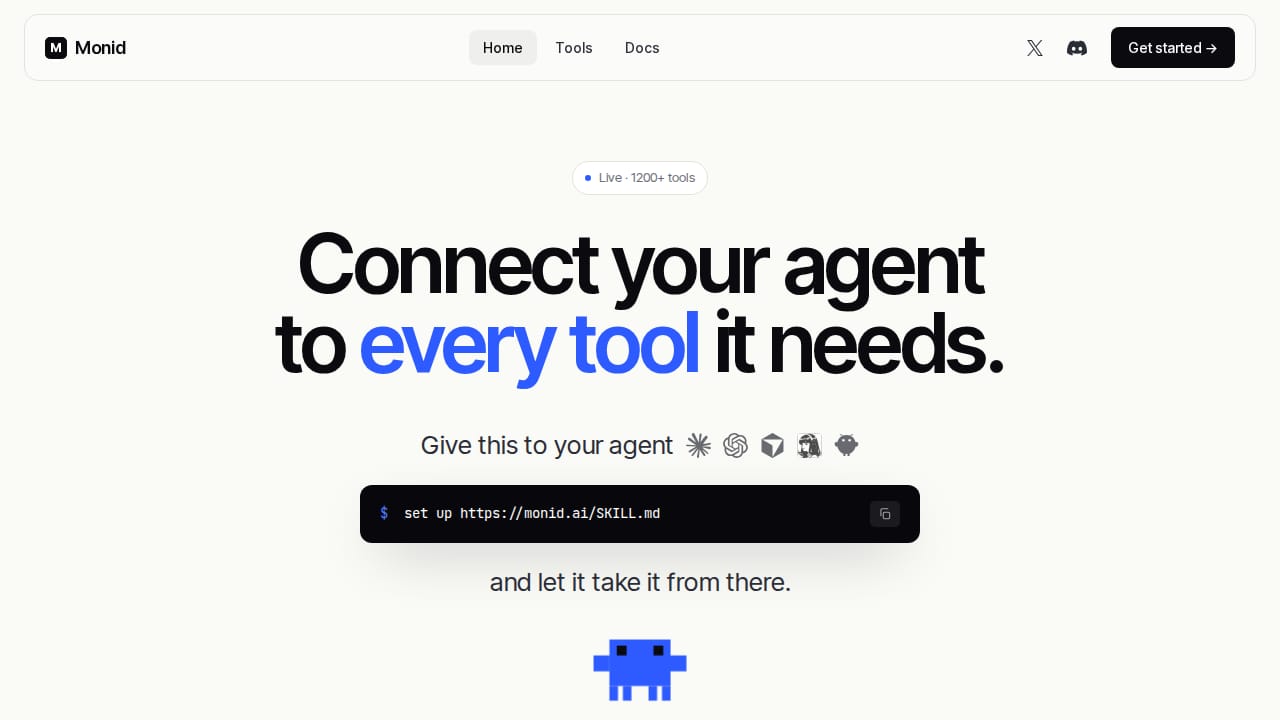
USE CASES
Test unfamiliar data providers through one account, CLI, and balance before building a direct integration
Run AEO and SEO monitoring across crawls, audits, keyword discovery, and answer simulations
Normalize competitor websites into one comparable positioning radar
Many more workflows and use cases to test across the 1,200+ tools
DESCRIPTION
Monid is trying to become the tool that ends all tools… Seems like a common trend amongst builders these days.
Instead of opening another account and buying another subscription, the agent can search a catalog, choose a provider, pay per call, and return the result through one integration. The idea is useful, but the product is definitely still in alpha, and it isn't able to connect to every tool needed.
REVIEW
The setup was easy and the onboarding was very nice. Across the three experiments I ran, I spent $0.52 and produced decisions I could act on.
The AEO/SEO workflow spent $0.28 on a crawl, conventional audit, keyword discovery, and ten web-grounded answer simulations. The homepage scored 100/100, but ATX appeared in 0 of 10 non-branded answer results ☹️. That’s okay though because now I have a site improvement task backlog to work on thanks to the audit!
The second experiment I ran was a competitor analysis workflow that discovered 33 pages across ATX and five Austin-based AI implementation consultancies. The results confirmed ATX Logic’s strongest position: client ownership, explicit handoff, security architecture, and evidence discipline. The results also showed where competitors communicate better: category, ICP, proof, engagement shape, pricing, and CTAs.
Long story short, there’s several different ways to test workflows with Monid, but…. it is NOT the one tool that rules them all.
Monid didn’t earn an A because provider limits, billing, and output quality still require too much manual review. It gets there with clearer final-price visibility, stronger provider-quality signals, and better schema normalization.
> Brody
VERDICT: B+
Cheap and easy way to test a bunch of different tools and loops through one API and account balance.
POSTGRES DATABASE
Neon: Grade A−
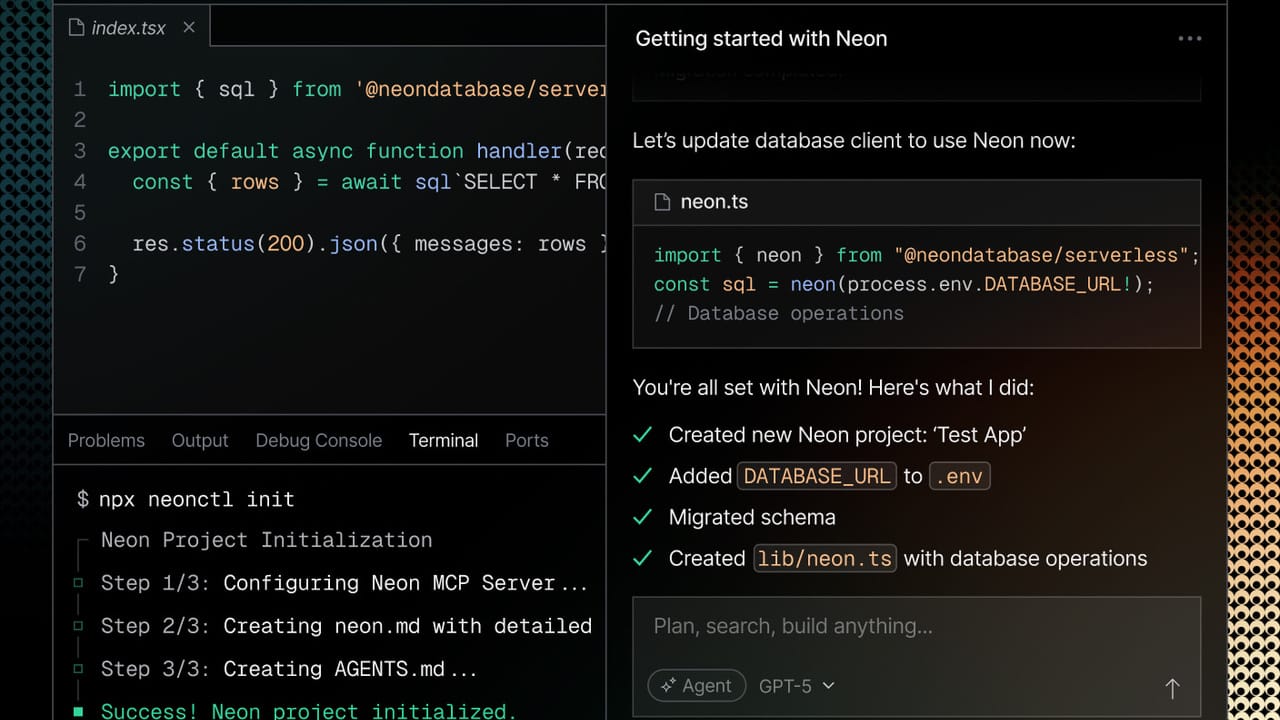
USE CASES
Stand up a Postgres backend without provisioning or self-hosting
Branch your database like Git to test schema changes
Let agents run migrations safely on a temporary branch first
Keep dev and staging databases near zero cost when idle
Store files in object storage that branches with your data
Point agents at your schema through the MCP
DESCRIPTION
Serverless Lakebase Postgres with branching, autoscaling and scale to zero. Real Postgres, not a fork, so your extensions and tooling work unchanged. It now ships Managed Better Auth, S3 compatible object storage that branches with your database, Functions, a Data API that is drop-in compatible with Supabase, and an AI Gateway.
Pricing is pure usage. The Free plan gives 100 CU-hours and 0.5 GB per project. Launch runs $0.11 per CU-hour, Scale $0.22, storage $0.35 per GB-month on both. Scale bundles SLA, SOC 2 Type 2, HIPAA eligibility, SSO and Private Link at no extra monthly fee.
REVIEW
Six months across a few different environments and I keep coming back to it. I think it’s a better option than Supabase if you just want a database and not a bundle. Support has been responsive when I needed them and the bill has stayed reasonable.
Naturally, the MCP is the main value add. Migrations run as two commands: prepare applies your change on a temporary branch and hands the agent somewhere to test it, then complete commits it to main.
Query tuning uses the same pattern. You can lock the server down, scope it to a single project, filter to specific tool categories, and curl the list-tools endpoint to see exactly what is active before you authenticate. That is the most straightfoward, yet comprehensive access control I've used.
It’s worth knowing that Neon's own docs say to use MCP for development and testing only, never against production databases, and to keep PII out of it. We treat that as the line.
Bills swing hard. Scale to zero makes idle nearly free, but a 2 CU database running 750 hours a month is $159 on Launch and $333 on Scale. Same database, very different invoice depending on whether it sleeps. Cold starts land around 700ms, the serverless driver is slower than a direct connection, and there is no BYOC or on-prem option if you need data sovereignty.
> Jake
VERDICT: A−
If you don't already have a SQL backend, start here. Wire the MCP into your agent stack for schema work and migrations, keep it off production, and set a spend alert before you disable scale to zero.
DESIGN & VISUALIZATION
Paper: Grade B-
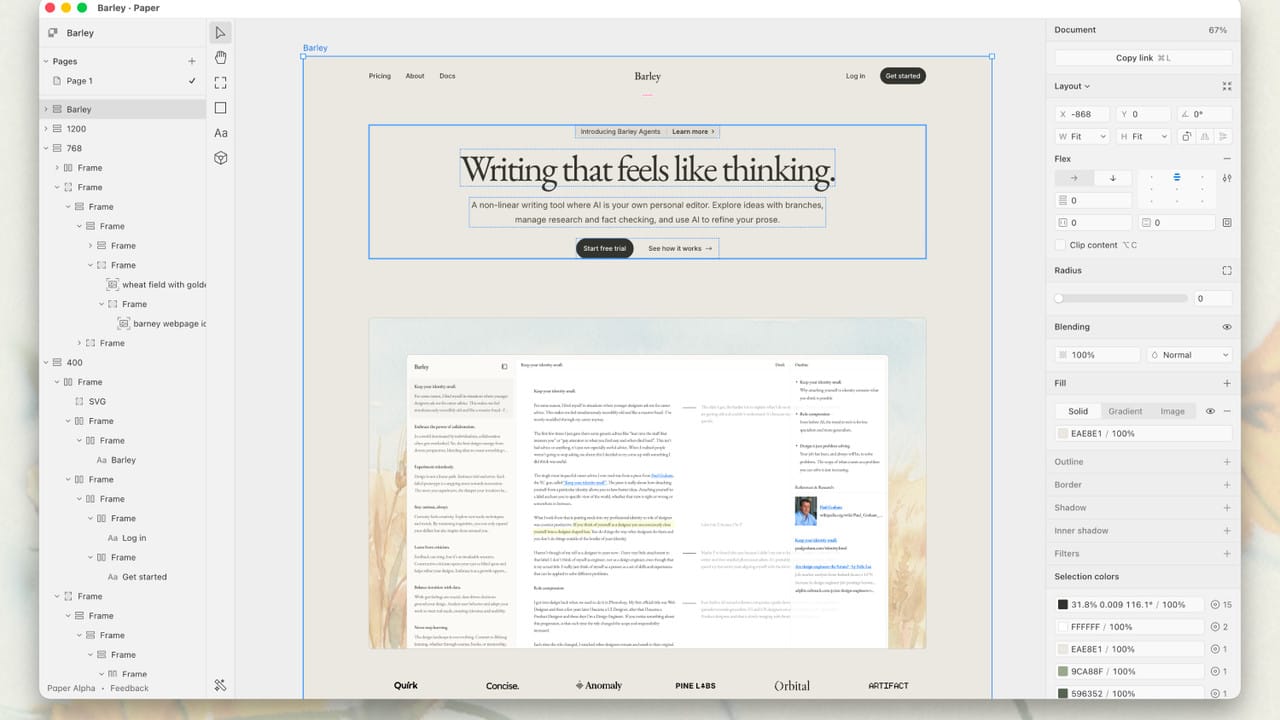
USE CASES
Turn live code and operational data into editable visual maps
Translate existing CSS into canvas-native design like Figma
Build multi-artboard audits and improve them through visual review
DESCRIPTION
Paper is an HTML/CSS design tool. For those who are familiar with Figma, it offers much of the same features and tooling but with a stronger MCP.
The Free plan listed 100 MCP calls per week, Pro is $20 per editor monthly or $16 with yearly billing.
REVIEW
Starting with the bad, the onboarding was a pain. Paper does not work cleanly with Hermes right now. The usable path was Codex or Claude with Paper Desktop running and the correct file open. I had to restart the agent after installation, open a new thread, and correct file routing when the MCP stayed attached to the wrong document.
Once connected and configured, the results were pretty good. Codex turned my personal agent system into a complete system map design, then built a board to help me visualize and audit my system’s knowledge base. Historically I would have done this by generating an HTML site hosted locally, but this was much easier and cleaner.
For this kind of agent-led visual work, Paper was much better than Figma. Its HTML/CSS model fits how coding agents already work, so existing tokens and layout rules translated directly into editable canvas nodes instead of fighting a brittle design-tool abstraction.
The free tier is still too small for serious iteration and I burnt my 100 weekly MCP calls during the knowledge-base audit. I also have not used Paper to design and edit ATX Logic’s production website yet, but I plan to do this this week since I hate using Figma.
> Brody
VERDICT: B-
Better than Figma for agentic visual building, but use Codex or Claude and expect some minor setup friction if using a third-party harness.
YOUR TURN
We want your input on the next Smoke Test!
Got something we should test? Hit reply and send us:
The tool or workflow
What you’re trying to accomplish
What you want us to test, compare, or break
We’ll test the strongest ideas and report back on what holds up. 🫡
> Brody & Jake
ATX LOGIC. AUSTIN, TX

Powered by beehiiv