Our First Major Disappointment
Matching the marketing claims to the actual results. Yikes!

ROUND 6
Sorry for the delay folks! It’s been a crazy busy week at ATX Logic. We’ve signed more clients, closed more partnerships, and of course… put more tools to the test.
Albeit, here we are with edition #006 of Smoke Test… and man, was this hyped up tool a major disappointment. I won’t spoil it in the introduction, so you’ll just have to read and find out.
Tools we tested this week:
Firecrawl: Crawling web pages for agentic research tasks
Gojiberry: End-to-end platform for lead sourcing, enrichment, and outreach
Traxy: Social signals-based prospecting
Three different parts of the prospect intelligence stack and three very different results. Let’s unpack everything. 😅
WEB DATA & PAGE CRAWLING
Firecrawl: Grade A-
USE CASES
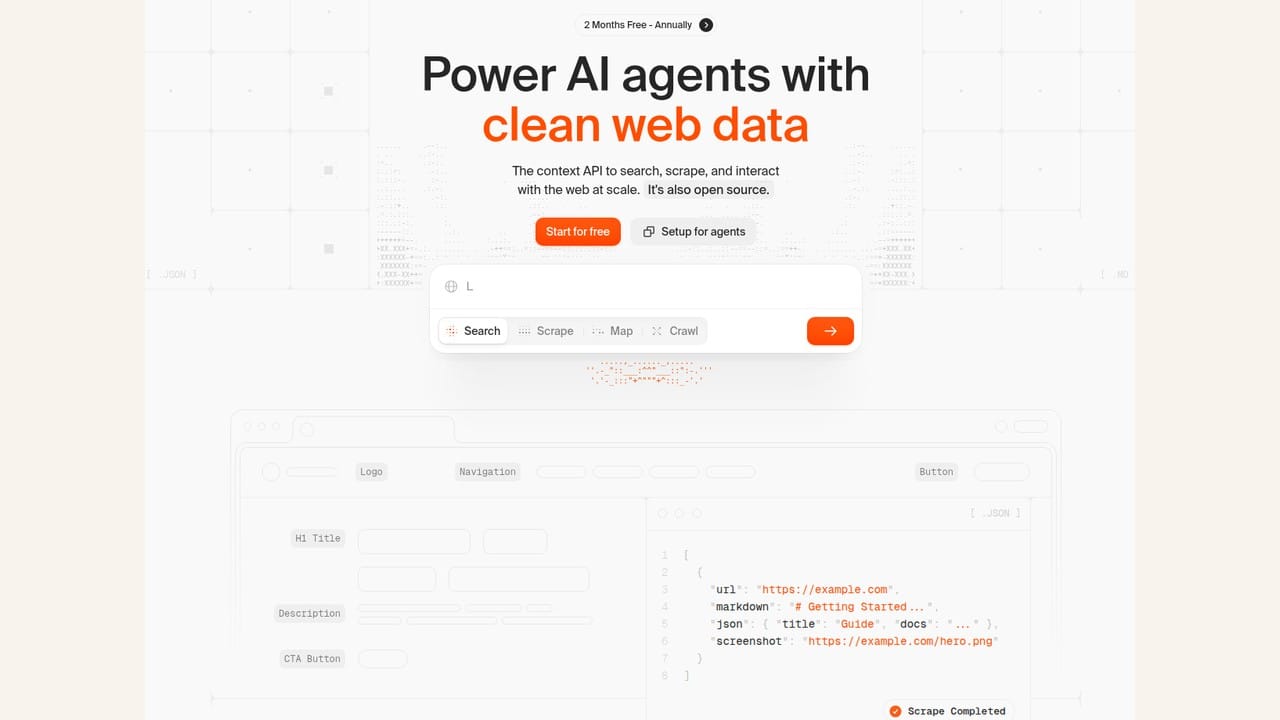
Turn any page into LLM-ready markdown with one API call
Enrich a prospect list with what detailed company information
Crawl whole sites to build an agent's knowledge base
Monitor competitor pages and get pinged only when something meaningful changes
Search the web and get full page content back in one move
Wire it into any agent harness through the keyless MCP
DESCRIPTION
The web data layer for agents. One API that searches, scrapes, crawls, maps, extracts and monitors, with proxies, anti-bot and JavaScript rendering handled for you.
The MCP is pretty slick. You can point any harness or coding agent at mcp.firecrawl.dev and search, scrape and parse work with no credential at all, plus native connectors in Claude and ChatGPT.
Real monthly pricing: free refreshes 1,000 credits a month, then Hobby $19, Standard $99, Growth $399, Scale $749, with roughly 20 percent off if you prepay the year. A page generally costs one credit.
REVIEW
My outbound runs on strong context, and Firecrawl is where I get the context. Brody and I have been experimenting with different ways to build lists, but what’s been working for me is using Firecrawl to find a few hundred small businesses in a vertical, scraping each company's site: services, team page, pricing, anything newsworthy.
My system ingests this data and answers the two questions that decide whether a contact gets a touchpoint:
What does this company actually do?
Which of our offers would they actually buy
The first line of every message we send references something real from their site, because an agent read it five minutes earlier. Nobody on our team opens those pages by hand anymore.
The math makes it boring, in a good way. Call it five pages per company at 1 credit each. A 500-company list costs about 2,500 credits, which sits comfortably inside the $19 Hobby tier. Enriching an entire vertical for the price of lunch. Once the sales call is booked, I also run the same loop to create a call brief that includes everything public about the contact, their role, and the company. Neat.
Another useful feature is the monitor functionality, which turns Firecrawl into a standing service. Point it at a client's top competitors and it alerts only when something meaningful changes, a price, a new offering, with the ping landing in whatever chat you use. That's competitor intelligence as a retainer line item that runs itself.
Now, it's also important to be aware of limitations. Social platforms aren't accessable; LinkedIn and Instagram anti-bot defenses beat Firecrawl like they beat everyone else, so you'll need a dedicated scraper if that's something you need in your stack. (Check out our review on Apify if you’re looking for Linkedin data.)
Conversely, it's overkill for simple static HTML. A free request library can handle that just fine. And while the core is open source under AGPL, the proxies, rotation, browser sandbox and Agent are cloud only, so the version you can self-host is missing exactly the parts that make hard sites work.
> Jake
VERDICT: A-
Make it the default web layer of your agent stack and treat credits like a budget line. Start on the free 1,000, test your exact targets, and script your Interact sessions instead of prompting them.
PROSPECTING & OUTREACH
Gojiberry: Grade F
USE CASES
Find and score prospects from an automated ICP
Enrich contacts and organize them into campaign lists
Build multichannel outbound campaigns
Consolidate the prospecting pipeline into one interface
DESCRIPTION
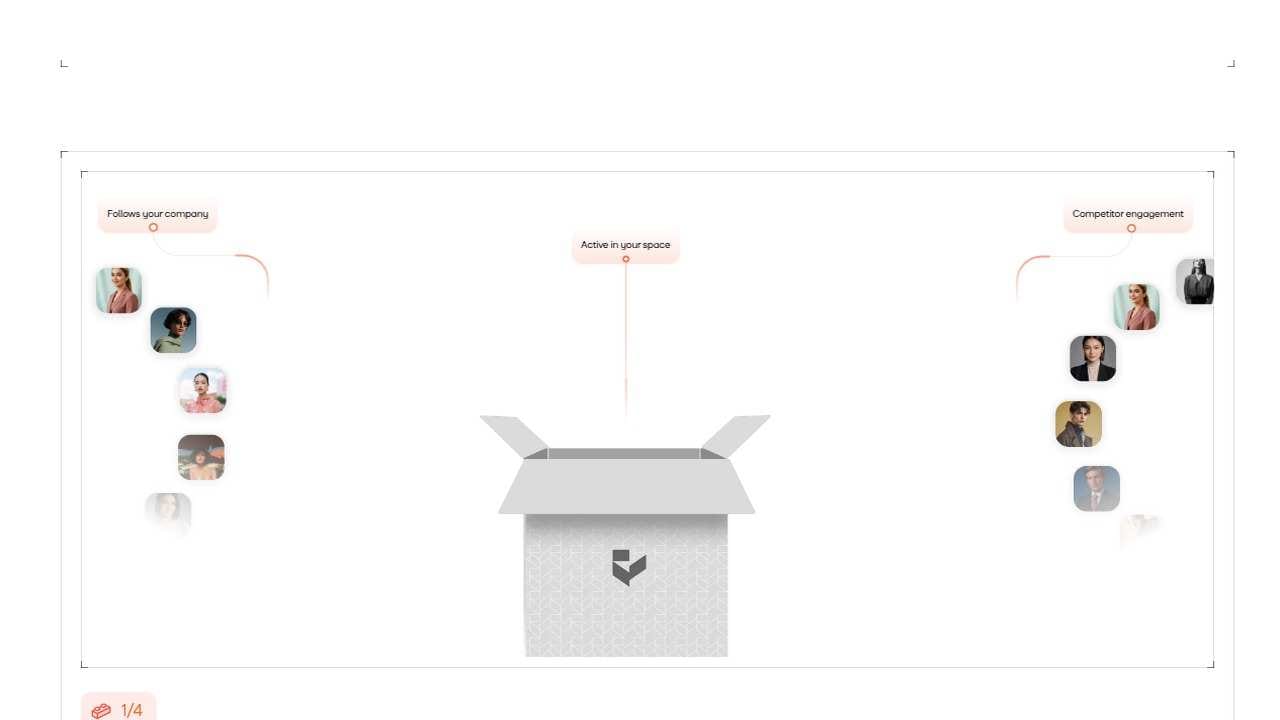
Gojiberry is a full-stack platform for prospecting, enrichment, and outreach offering agentic capabilities for all of the above features. The main thing it’s trying to do is reduce friction for sales teams to prospect. Basically, you describe who you want to reach, the agents find and score the contacts, and then you move them directly into a campaign.
We’ve reviewed a ton of these types of tools, many of them exist, and the probability is high that you’ve already tried one of them yourself… so no need to write an elaborate description. Pro plan runs at $99 per month with a 7 day free trial.
The pitch sounded good and their team’s marketing hooked me in (kudos to their head of marketing I guess), so I wanted to try it…. until I was extremely let down!
REVIEW
Like I said, I was originally excited because I’ve been receiving a barrage of clean, tasteful ads and content from their team. So naturally, there was a bit of hype going into it.
I tested this tool on a non-profit client of ours who is building a pipeline of sponsors and donors. Immediately once I started onboarding, I realized this platform wasn’t going to fit my needs.
There’s a new type of onboarding flow out there (that I actually like) where it leads you through a series of questions & steps that dial in your profile through in-depth automated research on your company.
For example, the Goji flow is:
Drop your company URL
Verify that this information is correct, change what’s not
Drop URLs for people you prospect types you want to find
Connect your apps & inboxes
However, the results that I got from the research were bad in comparison to other similar onboarding flows I have tried like Traxy (below), and I had to manually change a ton of stuff. It was also like I had to do research on my ideal prospects to onboard, which defeats the entire point.
Onboarding was way too many steps and took too much time for poorer results overall. Moving on from onboarding, the other features weren’t any better.
Right now, my current prospecting flow is to build a company list, find the right people, enrich their contact information, and then move everything into another tool to launch the campaign. If Gojiberry could handle that entire process, it would save us a ton of time… but it cannot.
In my narrow test, I tasked it with finding me potential corporate sponsors for the non-profit using a specific qualification brief. The first run returned 13 prospects and none of them passed. Not a few weak matches mixed in with good ones… zero matches. I gave the same task to my Hermes agent and it delivered me 30 solid companies in less time.
I corrected the brief and ran another control, but the results still weren’t strong enough to trust. The basic flows worked and I could create contacts, build lists, and move data around, but when we tried to turn those contacts into a campaign through the API, that’s where everything fell apart.
The external API couldn’t create the campaign we needed, so I ended up exporting a CSV and finishing the setup manually inside the UI. That is exactly the workflow Goji was supposed to eliminate! After messign around in the UI I realized this was pointless, so I gave up.
I don’t want to learn any products UI and if their API / MCP isn’t capable of basic things, like campaign setup, that their competitors already offer, I’m not using it.
So, I cancelled the plan, and went back to ole reliable: Hermes agent prospecting loops with my trusty enrichment and campaign management tools.
Gojiberry might be good for some people, like junior / non-technical SDRs who aren’t agent power users yet, but it didn’t work for us at all. Rant over.
> Brody
VERDICT: F
Don’t use it.
SIGNAL-BASED PROSPECT RESEARCH
TRAXY: Grade C+
USE CASES
Monitor engagement around competitors, teammates, partners, and peer organizations as a research-prioritization signal
Find people with current, attributable public activity instead of starting with a static contact list
Give an agent access to ICP, Watchlist, signal, lead, analytics, sync, and budget surfaces through a MCP
DESCRIPTION
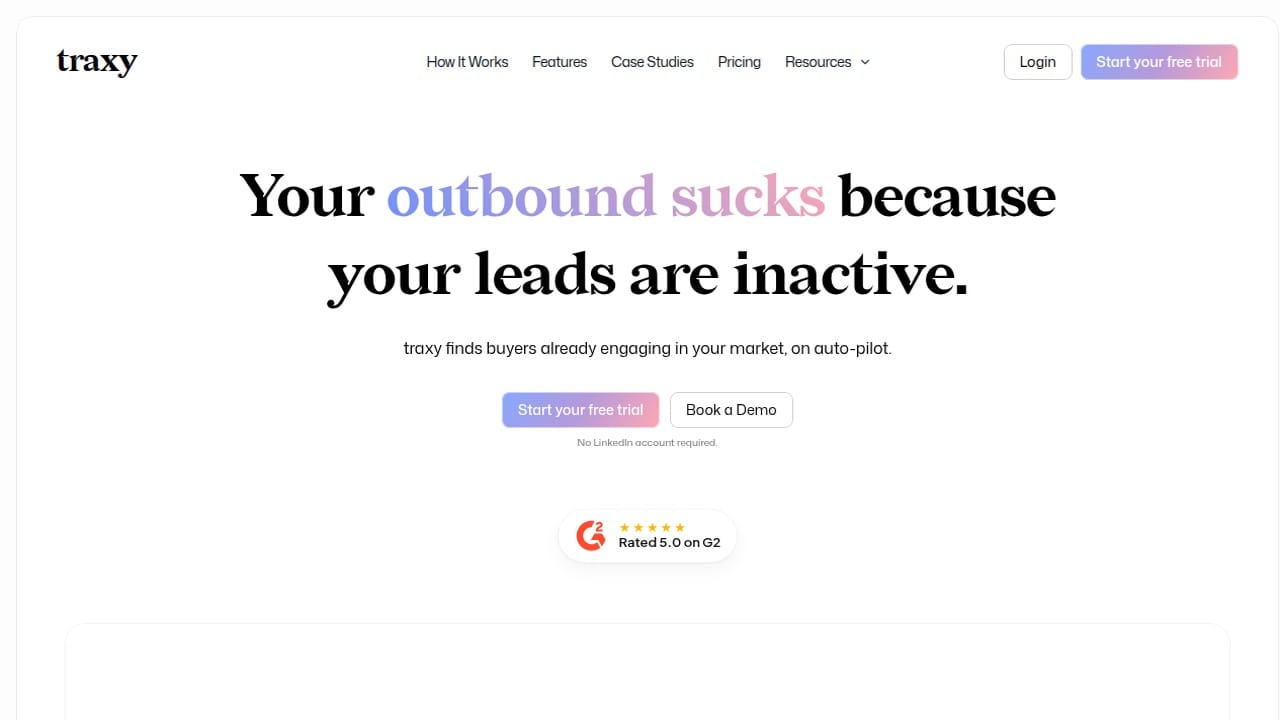
Traxy is a LinkedIn engagement-signal and ICP-qualification platform. It researches an organization, builds an initial ICP, monitors relevant profiles, and uses an automated Agent to surface people it believes fit that audience.
Traxy Pro is $149 per month for 5,000 credits, with a seven-day free trial and no credit card required… A little pricey considering all of the options on the market that offer similar features at a lower rate.
REVIEW
Testing Traxy for the same non-profit client I described above, I was placed in a similar, yet much improved, onboarding flow as Gojiberry… and dang, was the onboarding pretty sweet.
I added my client’s domain so the app could conduct the research and the results were awesome. I had to make very few manual changes, there were less steps, it was pretty quick, and I was immediately presented with useful fundraising, partnership, sponsorship, licensing, membership, campaign, and event concepts. Kudos there!
Post-onboarding, I went straight to the MCP, authenticated it, inspected the ICP it built and that’s where it started to drop off a bit. The ICP needed a bit of correction and there were some contradictory company-size and revenue filters, missing corporate-philanthropy and major-gifts roles, weak regional logic, and an incorrect description of the non-profit as a marketing-services company.
Odd considering that the initial onboarding results were pretty good? I am honestly not quite sure what happened there.
After extended use, the bigger gap became output. Traxy runs its searches in batches, most likely to hide from the LinkedIn bot detectors. Understandable, but the tradeoff is that it takes a long time to get results.
Through the first documented hourly boundary, the workspace had no evaluable candidate cohort: zero scans, candidates, qualifications, leads, or credits used. The Agent appeared queued and running at the same time, while engagement sync had only begun.
Traxy's documentation says the Agent scans hourly and onboarding processing needs time, so timing may explain the empty first-hour results. That does not prove bad lead quality. It shows slow, unclear time-to-first-value.
I give Traxy a provisional C+, with low confidence. I would test it again as a bounded signal-research layer, but I would not pay or scale it until it produces attributable candidates with predictable credit receipts.
> Brody
VERDICT: PROVISIONAL C+
Traxy gave us the best map of the market before it gave us anyone to call.
YOUR TURN
We are curious, how are you deciding who is worth contacting before your team sends anything?
Hit reply and send us:
The tool or workflow you currently trust
The signal that actually gets your attention
What you want us to test, compare, or break next
We’ll run the strongest ideas through a real workflow and tell you where they hold up…. or where they fall apart!
> Brody & Jake
ATX LOGIC. AUSTIN, TX

Powered by beehiiv